

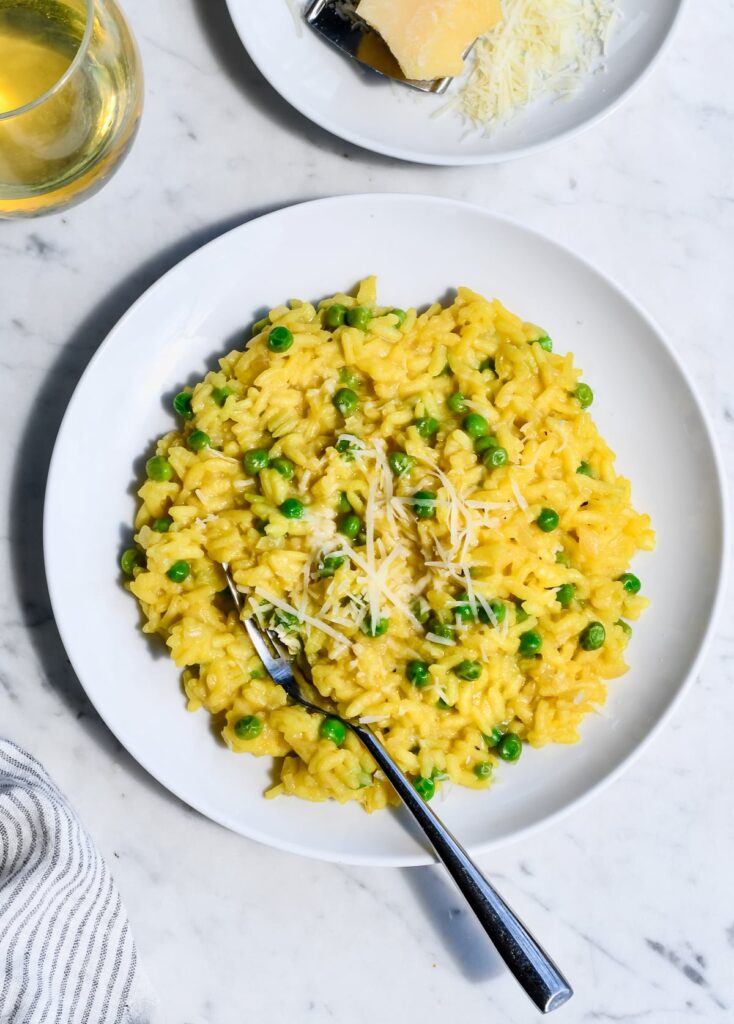
This is a perfect spring dish with a creamy texture, vibrant colors, and unique, complex flavors. The bright yellow from the saffron combined with the green peas reflects the fresh, renewed energy of the season, while also offering a gentle mood-boosting lift. It’s easy enough for a weeknight dinner and elegant enough to serve when you have guests.
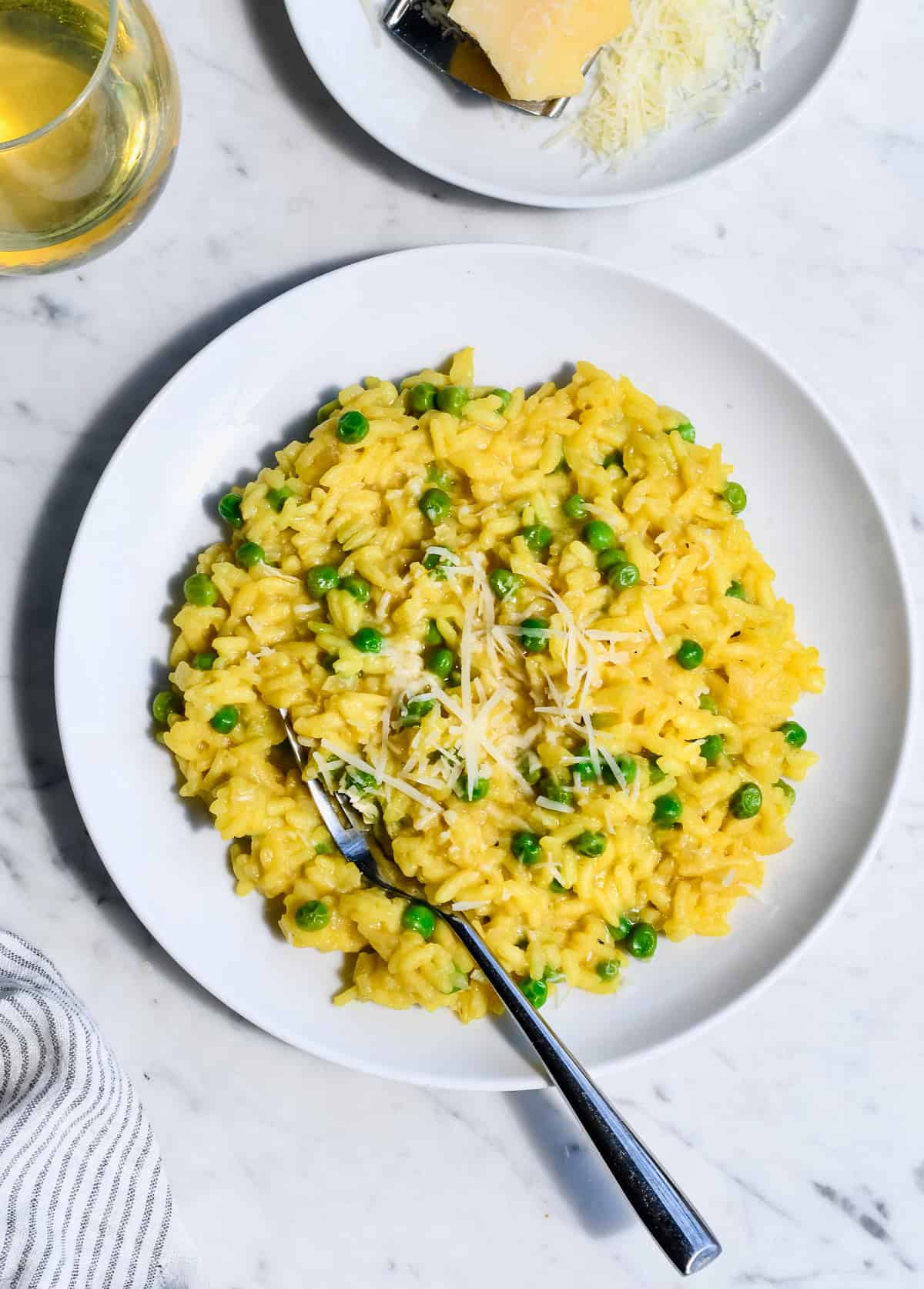
Saffron Risotto, aka risotto alla Milanese, is one of my favorite comfort food dishes. I find it meditative to stand at the stove stirring hot broth into the Italian rice until it turns tender and creamy. Years ago when I was working long days at my stores I would come home and make risotto to help ease into a calm, relaxed evening.
Is Risotto Hard To Make?
Risotto one of those dishes that’s so satisfying and always impressive. And while it has a reputation of being fussy and time consuming, it’s actually very easy to make. You’ll see in the steps below.
Saffron has an earthy, mildly sweet, almost honey-like flavor with a subtle bitterness and delicate floral aroma. It’s often called the “sunshine spice” and is known for supporting a positive mood by boosting serotonin in the brain.
Why You’ll Love This Dish
This golden-hued rice dish tastes amazing. It’s rich, creamy, and infused with saffron’s delicate floral aroma balanced with sweet spring peas.
- Nourishing comfort food – light, creamy and satisfying
- Mood Boosting – saffron is known to increase serotonin
- Easier than it seems – just a little stirring creates a wonderful creaminess
- Fresh spring flavor – sweet green peas add a bright, seasonal touch
- Beautiful and vibrant – that golden saffron color evokes feelings of optimism and joy
- Naturally gluten-free – made with simple, whole-food ingredients
- Plant-powered protein – green peas add fiber and plant-based protein
- Lighter than traditional risotto – creamy even without butter or cheese
- Feels grounding to make – slow cooking and stirring helps you unwind while you cook
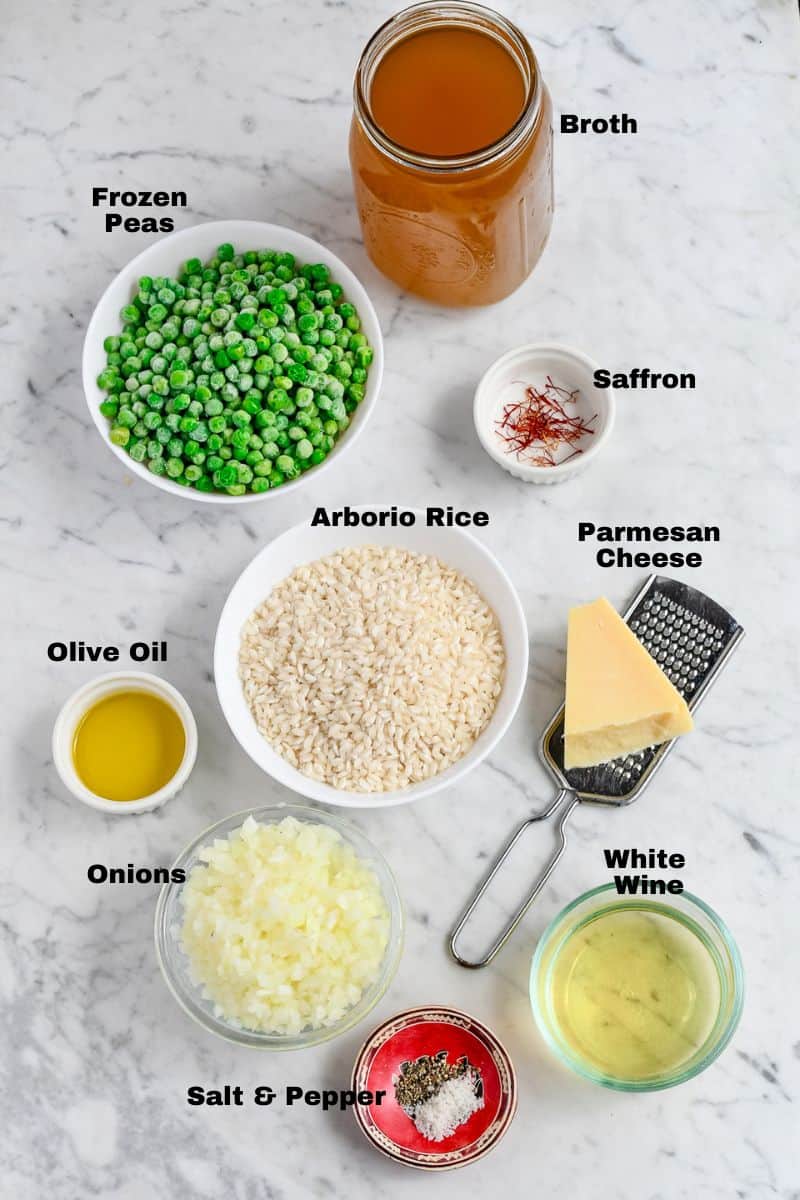
Ingredients
The key ingredient here is arborio rice. It’s contains a starch called amylopectin that when cooked and stirred, releases the starch into the liquid to make it creamy.
- Arborio rice – a starchy rice that creates the signature creamy texture.
- Saffron threads – adds a golden color and delicate, complex flavor. The best saffron comes from Iran (not available) , Afghanistan or Spain.
- Extra-virgin olive oil – for sautéing and building a rich base, butter or ghee can be substituted.
- Yellow onion – brings a mild sweetness and depth of flavor.
- Dry white wine – adds brightness and balances the richness. Use sauvignon blanc, pinot grigio or chardonnay. If you don’t have wine just use extra stock and a tablespoon of lemon juice or apple cider vinegar.
- Warm broth (vegetable or chicken) – the broth needs to be warm when you add it gradually to create a silky risotto.
- Frozen green peas – adds sweetness, color, and plant-based protein. Frozen peas are best for a nice bright color, fresh peas lack the same vibrancy.
- Parmesan cheese (optional) – adds a creamy savory finish. Parmesan makes it creamier but I’ve made it many times without. Leave out for vegan.
- Unsalted butter (optional) – gives the risotto additional creaminess. I don’t usually add it!
- Sea salt – enhances all the flavors
- Freshly ground black pepper – adds a subtle warmth
Steps to Make Saffron Risotto with Peas
Once you make this recipe you’ll see it’s not hard and you’ll make it frequently. You may find the frequent stirring a little challenging but if you think of it as a meditation it’s very soothing. Here are the steps:
Infuse the Saffron
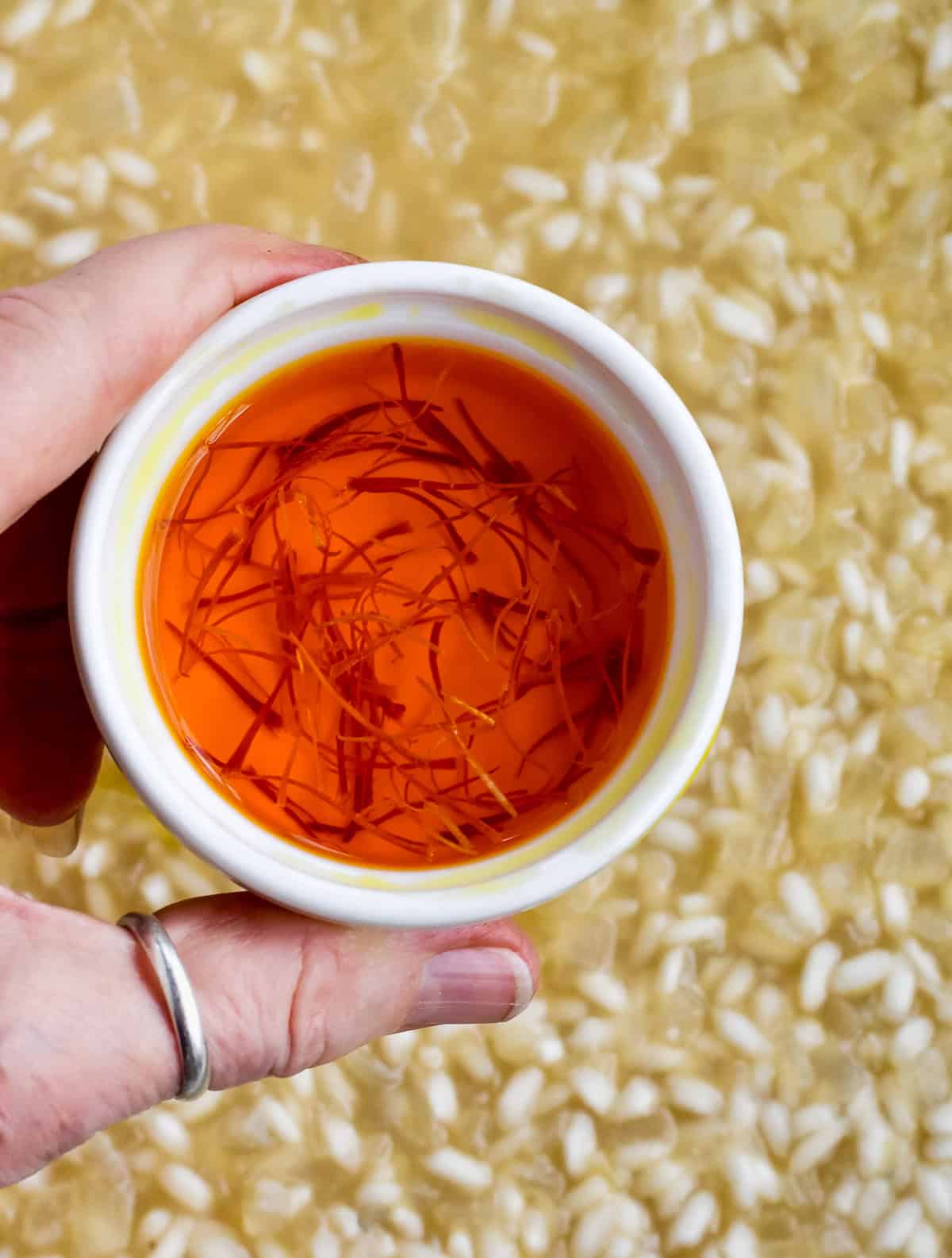
Combine the saffron threads with a little warm broth and set aside. This helps release the beautiful golden color and delicate flavor.
Warm the Broth
Keep the broth warm in a pot over low heat. Warm broth helps the rice cook evenly and keeps the risotto creamy.
Sauté the Onion
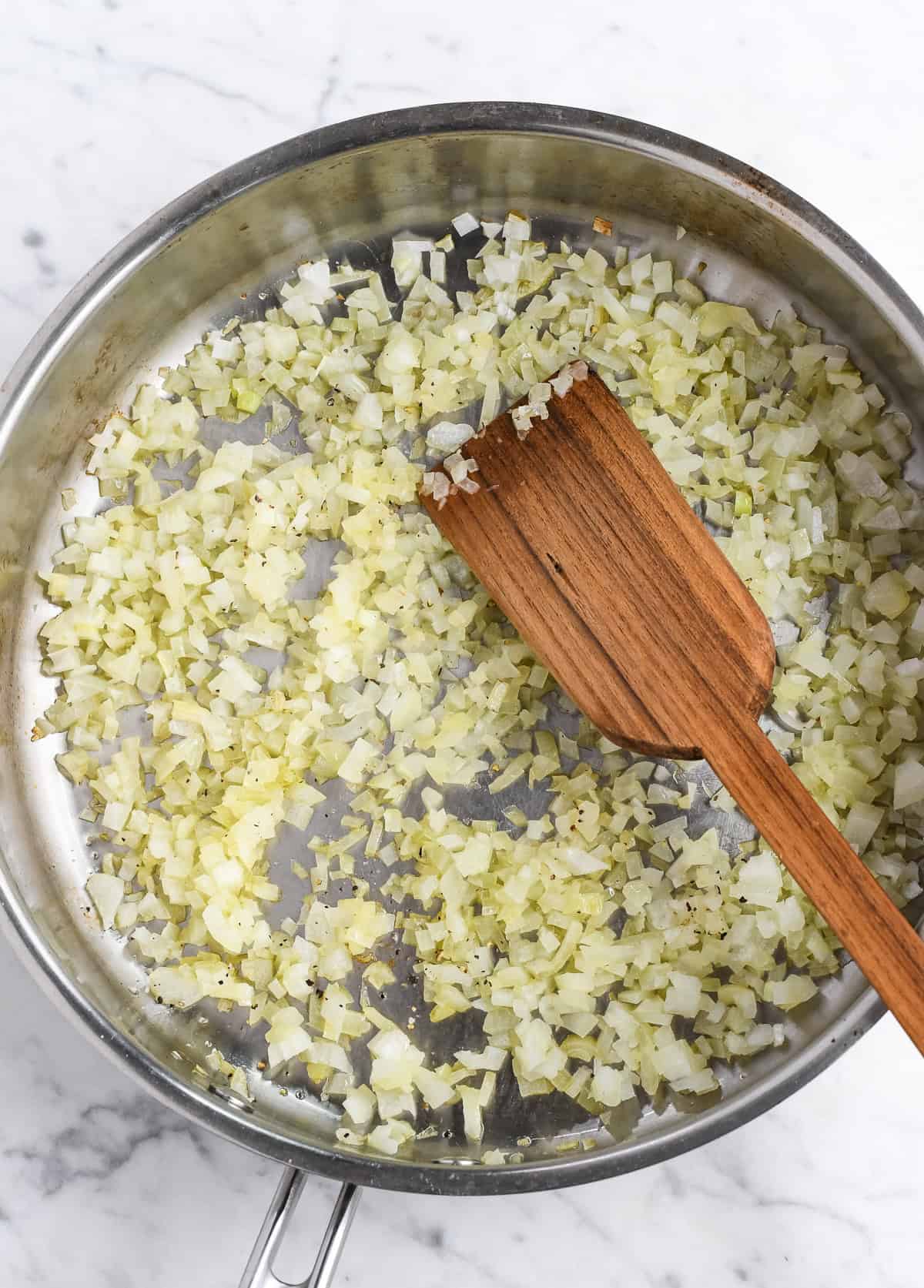
Heat the olive oil in a large skillet. Add the onion, salt, and pepper, and cook for a few minutes until softened.
Toast the Rice and Add The Wine
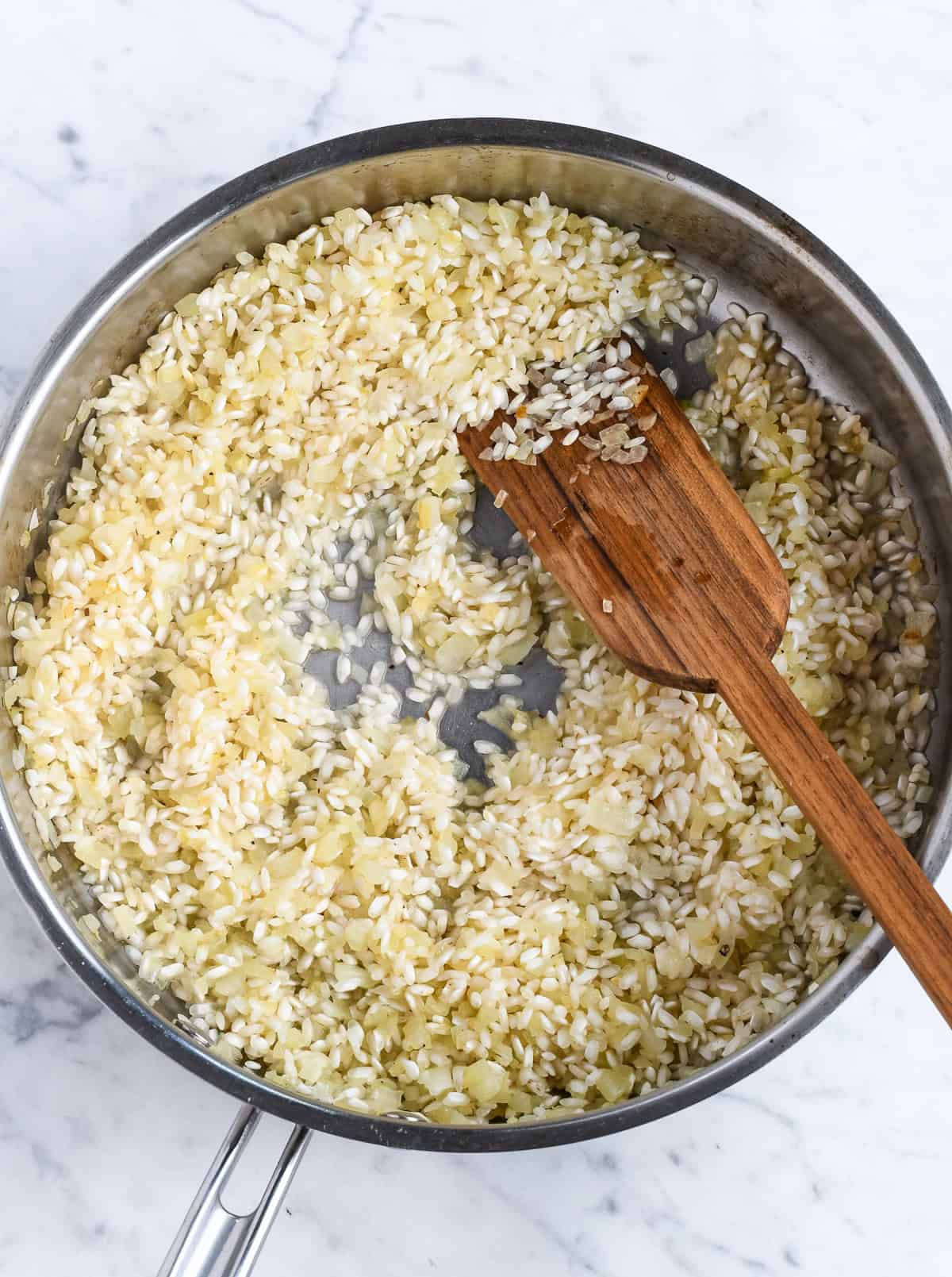
Add the Arborio rice and stir, toasting the rice for about 1 minute. This helps the grains absorb the broth slowly and gives the risotto the right texture. Pour in the white wine and cook until it’s mostly absorbed. This adds brightness and depth of flavor.
Add the Broth
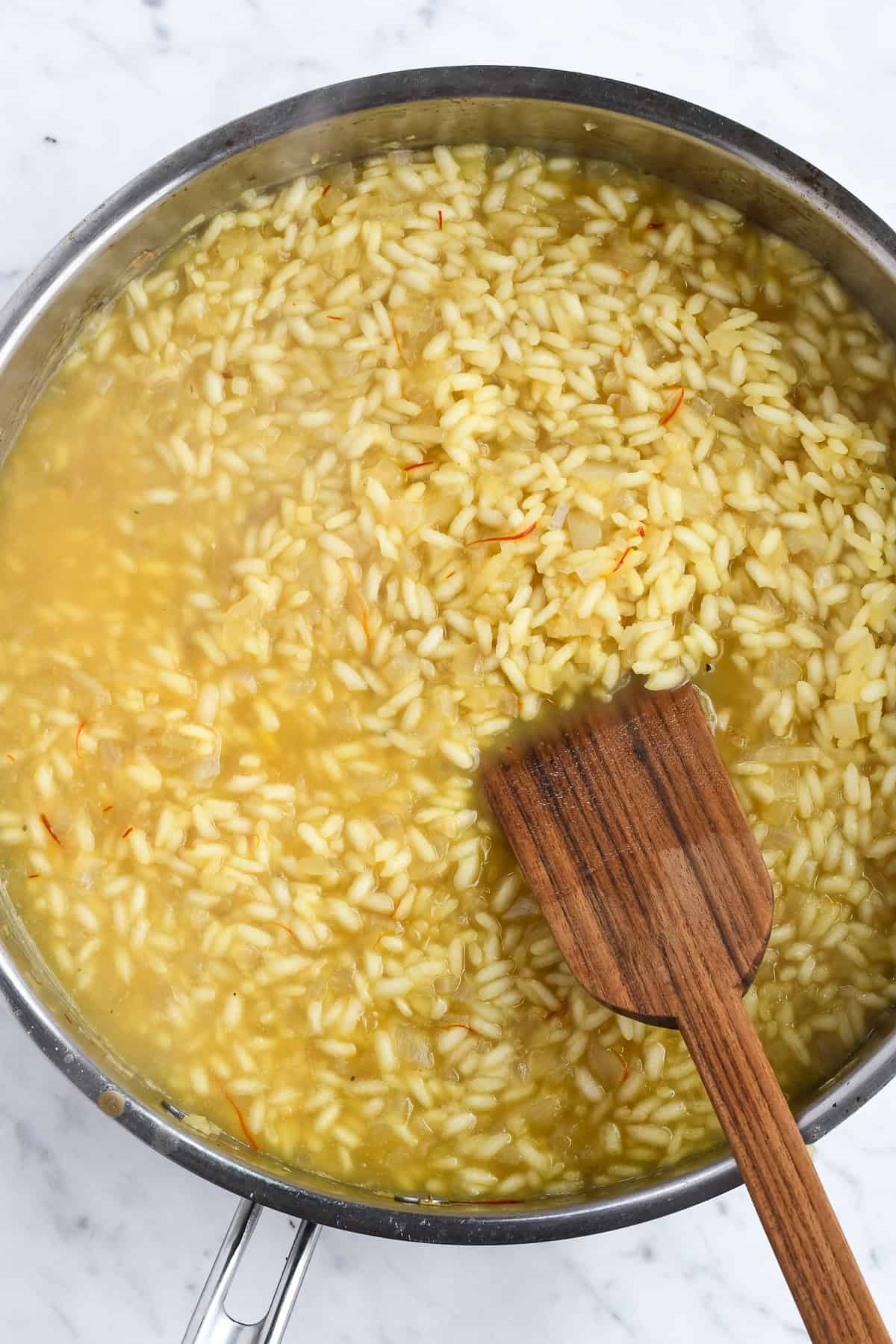
Add about ¾ cup of broth, just enough to cover the rice and stir as the rice absorbs the broth.
Add the Saffron
Stir in the saffron-infused broth early in the cooking process so the rice absorbs the flavor and turns golden.
Add Broth A Few Ladles At A Time
Add warm broth a few ladles at a time, stirring often and letting the rice absorb most of the liquid before adding more. Stir frequently to allow each addition of broth to be absorbed before adding the next. I always heat up more stock than I think I might need, just in case. You can always use that extra stock for something else later.
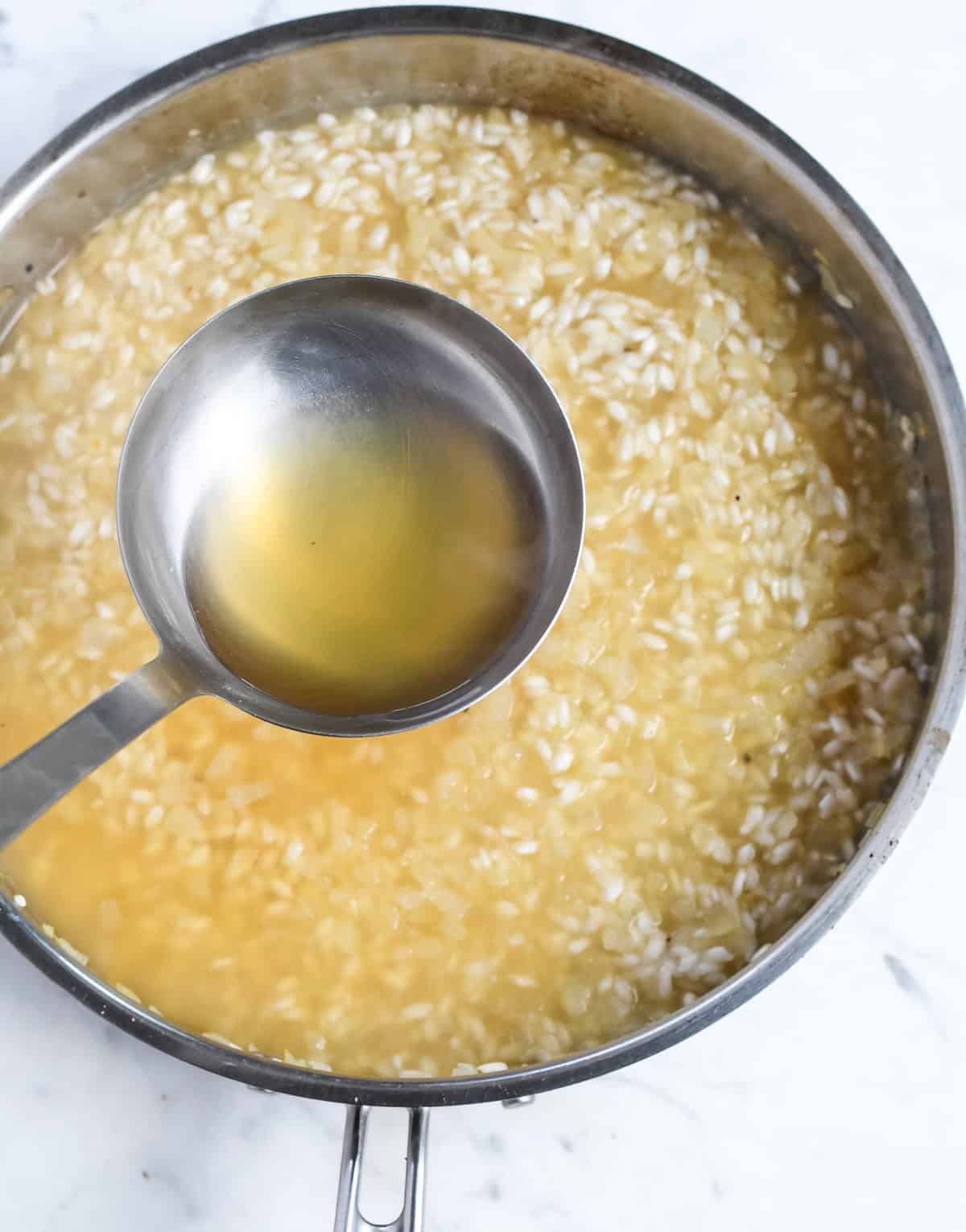
Cook Until Creamy
Continue adding broth and stirring until the rice is tender, creamy, and still has a slight bite. This usually takes about 18-20 minutes.
Add Peas and Parmesan
Add peas and stir to heat through. Remove from the heat, add parmesan. Stir until the risotto is creamy.
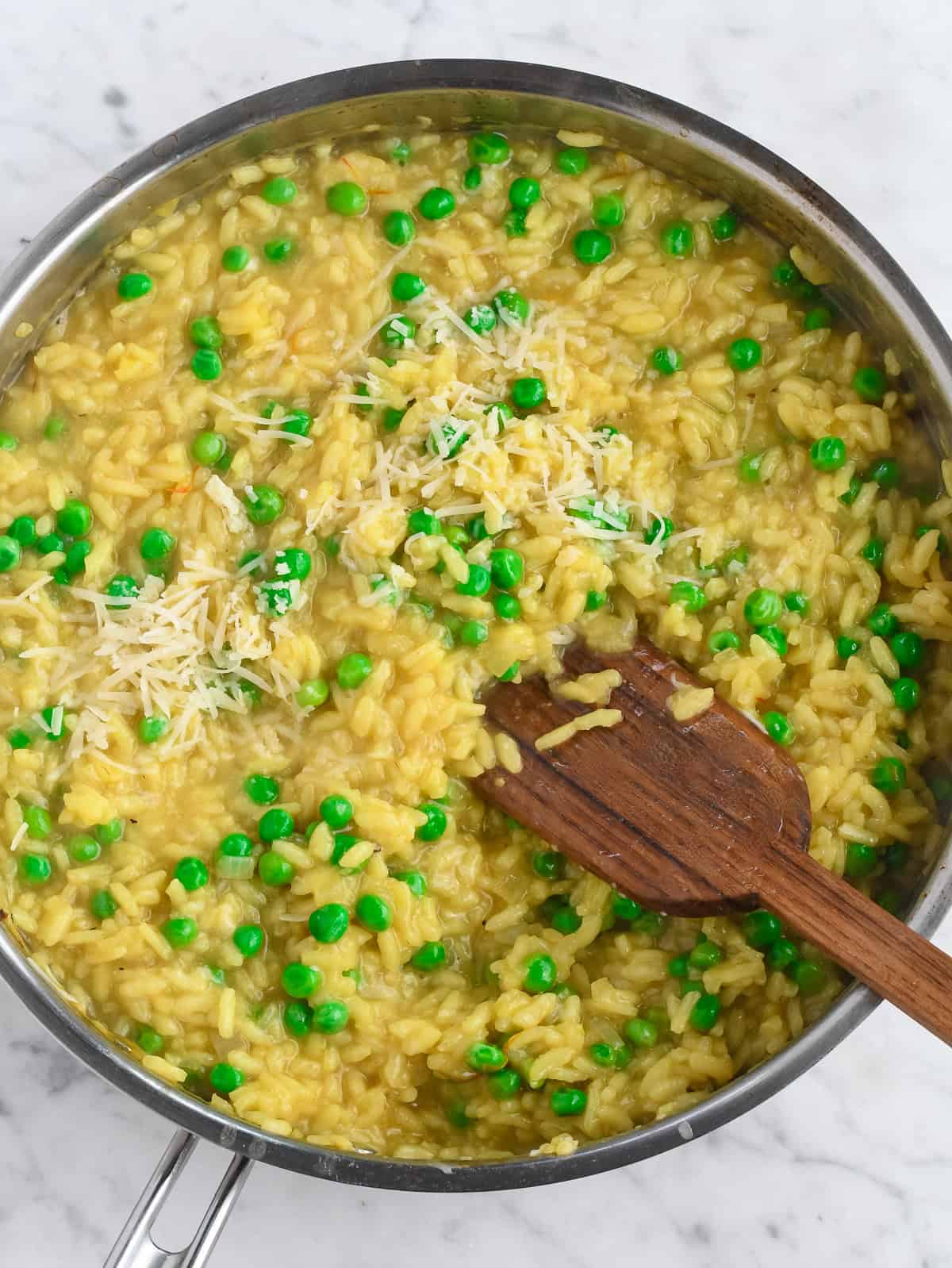
Season and Serve
Taste and adjust with salt and pepper. Serve immediately with extra Parmesan, if desired.
Chef’s Tips
- Always use warm stock. The warm stock gets more starch out of each grain of rice and helps prevent it from overcooking.
- Use a wide pan. You can make risotto in any sturdy pot, but a wide pan helps the rice cook more evenly and allows better contact with the heat. A saucier (a shallow pot with gently curved sides) is ideal, but any wide, heavy-bottomed sauté pan or a stainless steel Dutch oven works great .
- Toast the rice. Toasting the grains in the pan before cooking breaks down the starchy outside layer, allowing grains to absorb liquid (and flavor) more readily.
- Add stock in small increments. Adding too much warm stock at once will also result in a mushy mess. You know it is time to add more when the bottom of the pan starts to get dry.
- Monitor your heat. The goal is to maintain a gentle, consistent simmering bubble so the starch is released properly. Too low, and the stock will take a long time to absorb into the dish. Too high, and you’ll have rice stuck to the bottom of your pan.
- Stir often but not constantly. Stirring makes the sauce creamy. Stir every 30–60 seconds, or just enough to keep the rice moving and prevent sticking to the bottom. Stirring too much takes you past creamy and more towards gluey.
- Taste to see if it’s done. The whole process should take 18-20 minutes. When it looks creamy taste a grain, it should be soft with a slight amount of chew.
- Remove risotto from the heat before adding parmesan (or cold butter). This technique (stirring vigorously off-heat) binds the fat and cheese with the rice starch, creating a creamy, emulsified sauce rather than separated, clumpy cheese and oily rice.
Make Ahead, Storing and Reheating
Make Ahead: If you’re having a dinner party you can do what many restaurants do and par cook it. Cook until it’s 75% done, then remove it from the heat and wait until you are ready to serve to add the last bit of liquid to finish cooking it just before serving. Only do this if you plan to serve it within 2-3 hours.
Storing Leftovers: Leftover risotto can be stored in an airtight container in the refrigerator for up to 3 days.
Reheating: For the best results, heat some liquid (water or broth) in a pan. Add the leftover risotto, breaking up any large clumps, and reduce heat to low. Stir constantly as it heats, adding more liquid slowly until the risotto is creamy, warm, and the rice is tender, taking about 3–5 minutes.
Freezing: I don’t recommend freezing risotto, it loses its texture and creaminess.
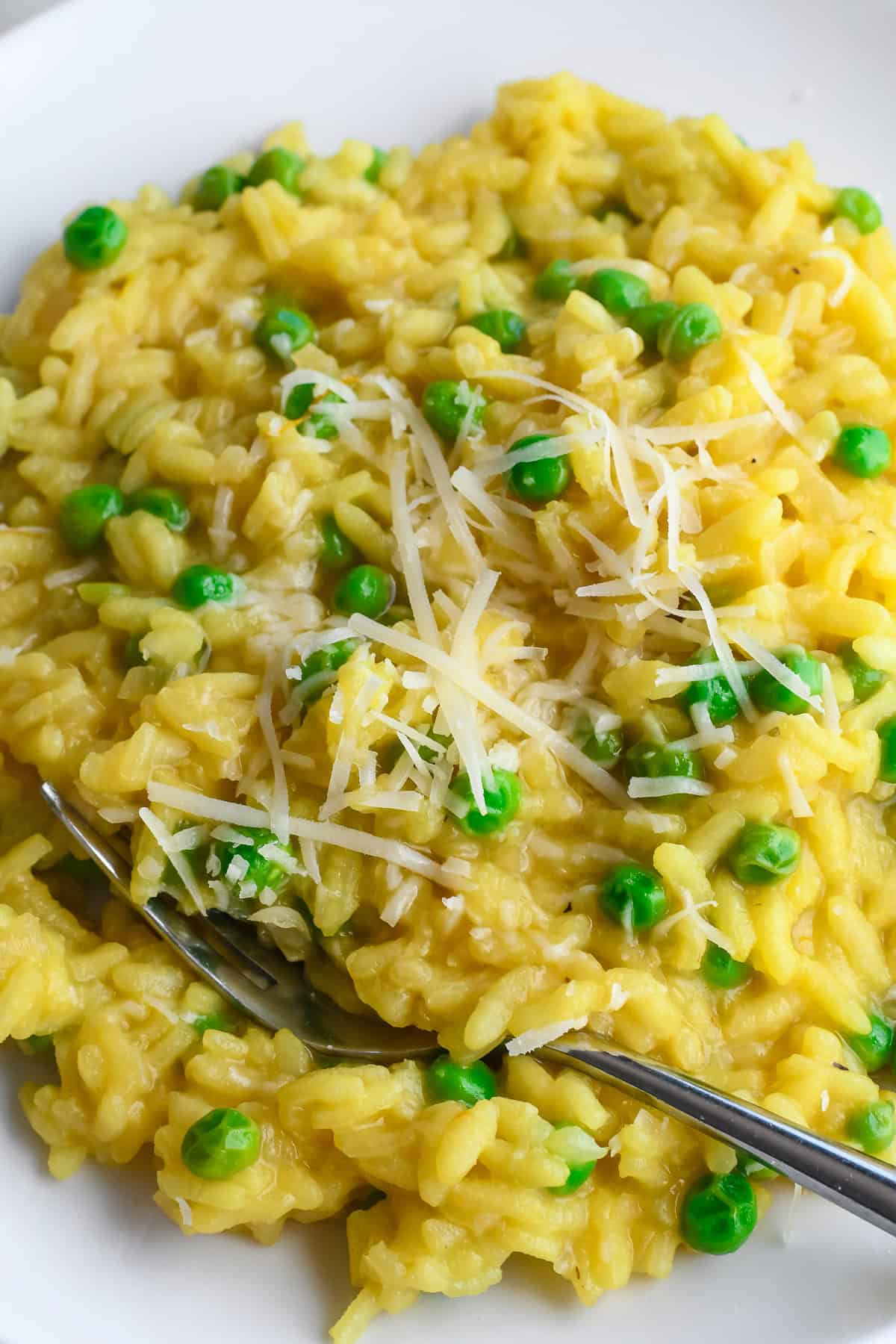
Variations
Saffron risotto can be served any time of the year. It’s delicious alone or with any of these options:
- Lemon Herb Saffron Risotto – add fresh lemon zest and herbs like parsley or basil for a bright, fresh finish
- Asparagus Risotto – stir in steamed tender asparagus for another spring option
- Spinach Saffron Risotto – fold in fresh spinach at the end for extra greens
- Mushroom Saffron Risotto – add sautéed mushrooms for a deeper, savory flavor
- Shrimp Saffron Risotto – top with simply sautéed shrimp for an elegant meal
- Chicken Saffron Risotto – add shredded or grilled chicken for extra protein
- Vegetable Risotto – mix in sauteed carrots, leeks, or fava beans
- Zucchini Saffron Risotto – sauteed diced zucchini instead of peas
- Truffle Saffron Risotto – drizzle with a little truffle oil for a special touch
More Saffron Recipes
Since I only recently started adding grains back into my diet, I spent many years enjoying lighter, grain-free versions of risotto. If you’re looking for a low-carb or paleo risotto, these are a few of the ones I’ve loved and made often:
★ Please leave a STAR ⭐️ rating! ★
The STARS ⭐️⭐️⭐️⭐️⭐️ help other readers connect with this community. I’d also love to hear from you in the comments below. And if you’re hungry for more delicious healthy food inspiration and tips to eat well and enjoy your wonderful life sign up for my free newsletter.
Enter your email to receive this recipe, along with weekly recipes and inspiration.
Spring Saffron Risotto with Peas

 Print Recipe
 Pin Recipe
A perfect spring dish with a creamy, texture vibrant colors infused with saffron’s mood boosting floral aroma balanced with sweet spring peas,
- Prep Time: 5 minutes
- Cook Time: 20 minutes
- Total Time: 25 minutes
- Yield: 4 servings
- Category: Main Dish
- Method: Simmer
- Cuisine: Gluten Free, Vegetarian
Ingredients
- 1/2 teaspoon saffron threads
- 1 1/2 Tablespoons extra-virgin olive oil
- 1 medium yellow onion, chopped
- 1/2 teaspoon sea salt, plus more to taste
- Freshly ground black pepper
- 1 1/2 cups uncooked Arborio rice
- 1/2 cup dry white wine
- 6 cups warm broth, (vegetable or chicken)
- 1 ½ cups frozen peas, thawed by rinsing in warm water
- 1/2 cup Parmesan cheese (optional)
- 1/4 cup cold unsalted butter, cubed (optional)*
Instructions
- Combine a large pinch of saffron threads with ¼ cup of chicken broth in a small bowl to let it infuse and release its yellow color. Set aside.
- In a medium pot, warm the broth over low heat and keep warm on low heat. Using warm broth helps cook the risotto faster and more evenly.
- In a large skillet, heat the oil over medium heat. Add the onion, salt and several grinds of pepper, and cook for 2 to 3 minutes.
- Add the rice. Stir and toast the grains for about 1 minute.
- Add the wine. Stir and cook for 1 to 3 minutes, or until the wine gets absorbed.
- Add about ¾ cup of broth, just enough to cover the rice and stir as the rice absorbs the broth. Once most of the liquid has been absorbed into the rice, add 2-3 more ladles, stirring constantly.
- Add the saffron along with the second ladleful of broth.
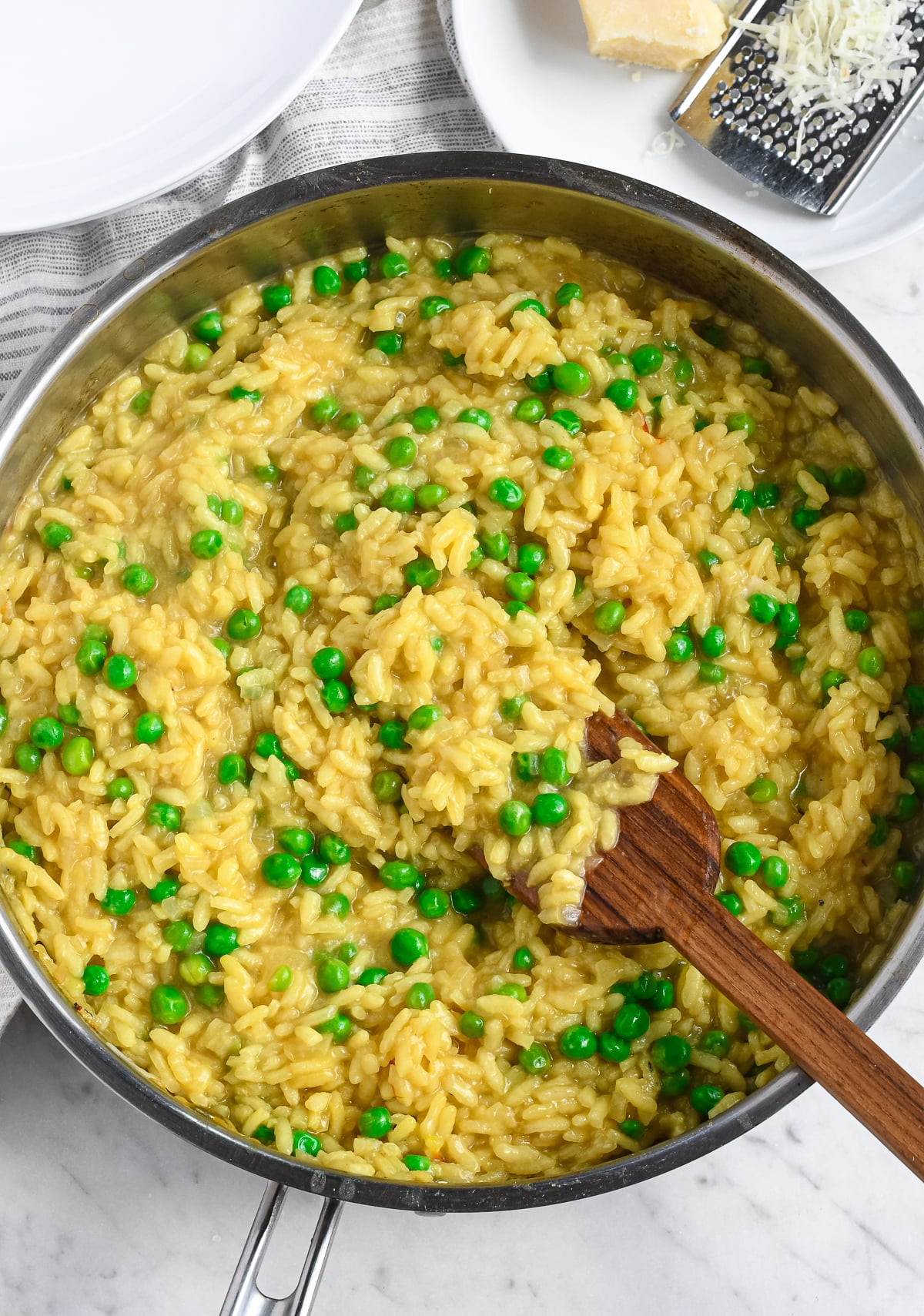
- Slowly add warm broth, 2-3 ladles at a time, stirring gently with a wooden spoon.
- Stir frequently* to allow each addition of broth to be absorbed before adding the next. Repeat this process until risotto is cooked. The goal is to maintain a gentle, consistent simmering bubble so the starch is released properly. This whole process should take about 18-20 minutes.
- When you think it’s done, it should be creamy but not too thick. Taste a grain, it should be soft with a slight amount of chew to it. If it needs more time, simply stir with more of the warm stock until cooked to your liking. You may not use all your stock.
- Add the peas and stir to heat through.
- Once the risotto is done, REMOVE IT FROM THE HEAT. Add freshly grated parmesan cheese and butter (if using). Stir until it’s extra creamy. Season with salt and pepper to taste. Serve immediately, garnished with additional parmesan.
Notes
Stir often but not constantly. Stir every 30–60 seconds, or just enough to keep the rice moving and prevent sticking to the bottom.
*For extra creamy risotto add ¼ cup cold unsalted butter, cubed, along with the parmesan. I don’t usually add butter but it does make it creamier.
The post Spring Saffron Risotto with Peas appeared first on Eat Well Enjoy Life – Pure Food, Radiant Energy (gluten free).