


Bisi Bele Bath is a delicious rice and lentil dish from Karnataka in South India. It’s comforting, comes together with everyday ingredients, and tastes like comfort and hug in a bowl.

Whenever the weather turns rainy, I immediately want to whip up something warm and comforting. While pakoras and soups will always be favorites, you need to try this bisi bele bath recipe the next time. It’s a simple, one-pot dish from Karnataka, India and is made using rice, lentils, veggies, and finished with an aromatic tempering.
The main flavor of this dish comes from a special spice blend called bisi bele bath powder and it’s unlike anything you’ve tasted before. For convenience and ease, I have used a store-bought bisibelabath masala, but you can easily make yours from scratch at home. Serve this delicious rice dish with papad or potato chips for a soul-satisfying meal.
jump to section: Bisi Bele Bath
Bisi Bele Bath Ingredients
Rice: I have used jeera samba rice for this recipe, but you can use any short-grained variety you like
Dal: We use toor dal as the main lentil. But this recipe also uses chana and urad dal in the tempering for a nutty flavor and texture
Veggies: Sambar onions, tomatoes, carrots, capsicum, beans, and green peas for flavor and texture
Spices: Mustard and cumin (jeera) seeds, along with hing (asafetida), turmeric powder, and red chilli powder add warmth, color, and flavor to our bisi bele bath
Bisi Bele Bath Masala: The MVP of this recipe and the ingredient responsible for that authentic taste. I have used a store-bough bisi bele bath masala, but you can make yours at home too
Cashew nuts: Split in half, for added crunch and texture
Dessicated coconut: Adds a lovely, nutty flavor to the dish
Herbs: Lots of fresh curry leaves and coriander leaves for an earthy fresh flavor
Tamarind extract: To add brightness, tang, and that authentic Karnataka flavor
Jaggery: To balance out the tang tamarind and add a subtle sweetness
Ghee: The fat of choice to cook this dish in. It adds a beautiful richness and aroma. You may replace it with oil, but it will change the flavors slightly
Frequently Asked Questions
Sambar rice is from Tamil Nadu and is a preparation of rice, lentils, and veggies using sambar powder as its primary spice mix. Whereas Bisi Bele Bath uses a special Bisi Bele Bath masala that gives it a deeper, more complex flavour with hints of spices, coconut and tamarind. Bisi Bele Bath is also typically softer and more porridge-like in consistency.
Khichdi is usually a simple, mildly seasoned combination of rice and dal, while Bisi Bele Bath is much more flavourful, made with vegetables, tamarind and a distinctive spice blend called Bisi Bele Bath masala. Bisi Bele Bath also has a more complex, spicy-tangy flavour and is traditionally served with a tempering and ghee.
Yes, this dish can be a healthy and balanced meal. It combines rice and toor dal for carbohydrates and plant-based protein, while the vegetables add fibre, vitamins and minerals. The amount of ghee or oil can affect its overall calorie content, so using it in moderation can make the dish lighter while still keeping it flavourful.
Bisi Bele Bath is typically mildly to moderately spicy, but you can adjust the heat by increasing or decreasing the amount of chilli powder in the dish.
Richa’s Top Tips
- Cook the rice and dal until very soft. Bisi bele bath is supposed to have a slighty mushy, porridge-like consistency. So it’s important to overcook the rice and lentils a little bit.
- Add the tamarind gradually. Tamarind gives the dish its lovely tang, but the amount needed can vary depending on how concentrated your tamarind is. Taste and adjust as you go.
- Don’t skip the tempering. A final tempering of ghee, mustard seeds, curry leaves and other spices adds so much flavour and aroma to the finished dish.
- Let it rest before serving. Give it a few minutes to sit after cooking. This allows the flavours to come together and gives the rice and dal time to absorb the masala.
Storage Tips
Fridge: Bisi Bele Bath keeps well in the refrigerator for 3 to 4 days. Allow it to cool completely before transferring it to an airtight container and refrigerating.
Reheat: It will thicken as it cools, so add a splash of water when reheating. Reheat it gently on the stovetop or in the microwave, stirring occasionally, until piping hot.
Freeze: You can also freeze this dish for up to 1 month, although the texture may be slightly softer after thawing.
Serving Ideas
Bisi Bele Bath is delicious on its own, but a few simple accompaniments make it even better.
- With a crunchy side: Boondi, potato chips, papadam make for the perfect crunchy accompaniment to this comforting rice dish.
- A cooling accompaniment: You can also serve this with a bowl of freshly set curd, some vegetable or cucumber raita, or even a refreshing cucumber salad.
- Drizzle some ghee: A generous dollop of ghee just before serving adds a ton of flavor and I highly recommend it!
- For a more traditional meal: Serve alongside a few vegetable sides (like this onion potato sabzi, or karela fritters, or any other sabzi you like), pickle, and crunchy papad.
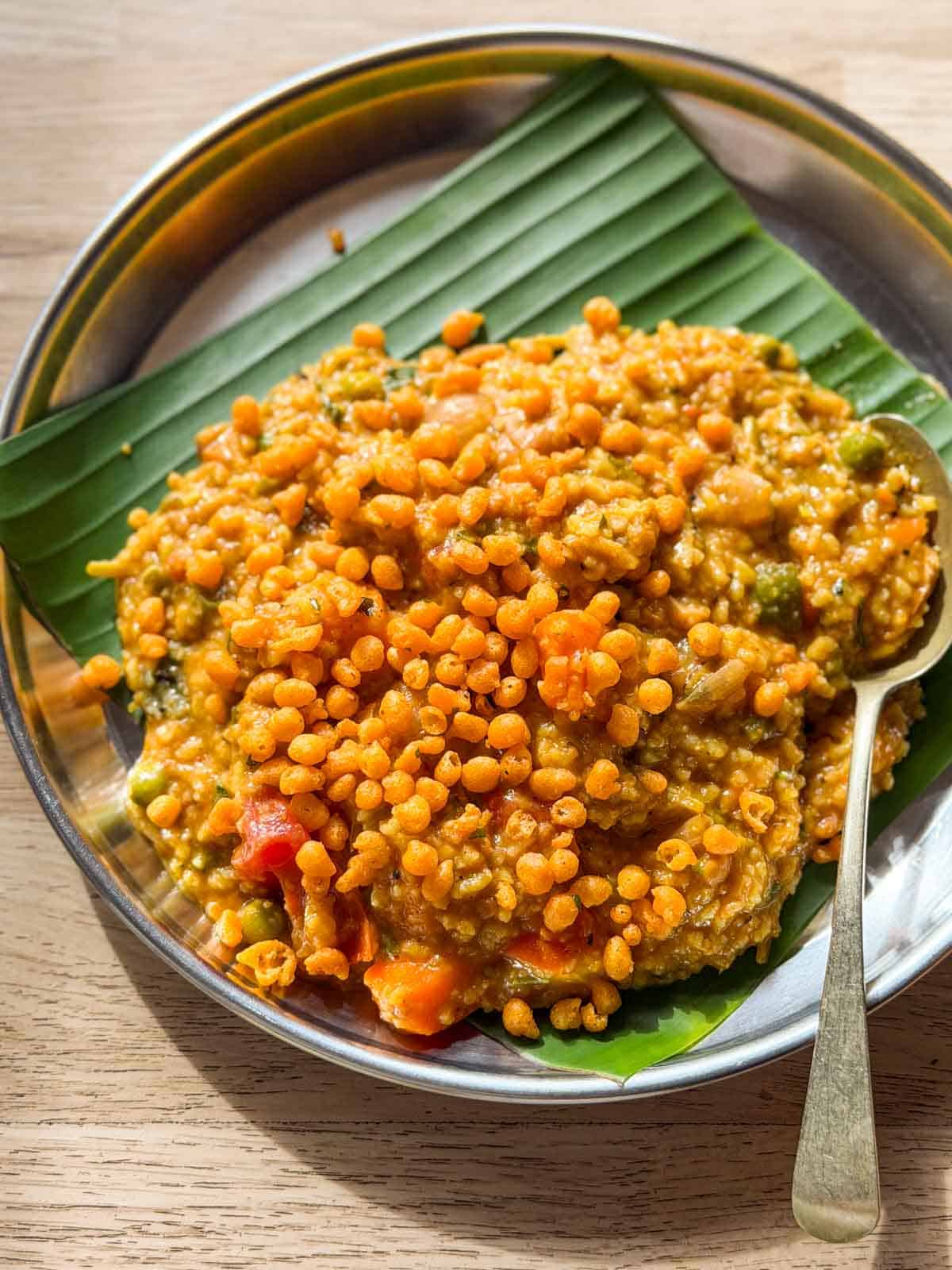
You need to make this bisi bele bath just once to fall in love with it and add it to your dinner rotation. It’s comforting, warming, hearty, wholesome, and so so delicious. If you make this recipe, DM me your pictures or tag me in stories over on my IG @my_foodstory ❤️
Watch Bisibelabath Recipe Video
Bisi Bele Bath | Bisibelabath
Equipment
Ingredients
Rice and Dal
- ¾ cup rice
- ½ cup tur dal
- ½ cup carrots cut into thick 1 inch pieces
- ½ cup beans cut into 1 inch pieces
- 1 teaspoon salt
- ½ teaspoon turmeric powder haldi
- 1 tsp oil
- 2 cups water
Other Ingredients
- 2 tablespoon ghee
- ½ teaspoon rai mustard seeds
- ¼ teaspoon jeera cumin seeds
- 1 teaspoon urad dal
- 1 teaspoon chana dal
- 5-6 cashewnuts split in half
- 12-15 curry leaves
- ½ teaspoon hing
- 2/4 cup sambar onions whole or halved
- 1 green capsicum cut into ½ inch cubes
- 2 tomatoes cut into1 inch cubes
- ¼ cup grated dessicated coconut
- ¼ cup bisibele bath powder i used MTR bisibele bath powder
- ¼ cup tamarind extract not super thick (see note 1)
- 1 tablespoon jaggery
- ½ tsp chilli powder
- 1 ¼ teaspoon salt adjust to taste
- ½ cup green peas
- 3 cups water
- 3 tablespoons chopped coriander
Instructions
-
Add rice, dal, carrots, beans, salt, turmeric, oil and water to a pressure cooker. Cook on high for 1 whistle, then reduce the flame and cook for 2 more whistles. Let the pressure release naturally.
-
Heat ghee in a large kadhai or pot and add mustard and jeera. As they start to crackle, add urad dal, chana dal, cashews and roast till they are a light golden brown. Add curry leaves and hing.
-
Add sambar onions and capsicum and saute for two minutes. Add tomatoes, dessicated coconut, bisibele bath powder, tamarind extract, jaggery, chilli powder, salt, green peas and 2 cups of water. Boil this for 3-4 minutes.
-
Add the cooked rice, dal and veggies along with another cup or more of water (adjust as per the consistency you prefer) and simmer for 3-4 minutes. Top with fresh coriander.
-
This can be served immediately but I prefer to serve it after a couple of hours. The taste just gets better as it sits!
Nutrition
This article was researched by Urvi Dalal
The post Bisi Bele Bath | Bisibelabath Recipe appeared first on My Food Story.