

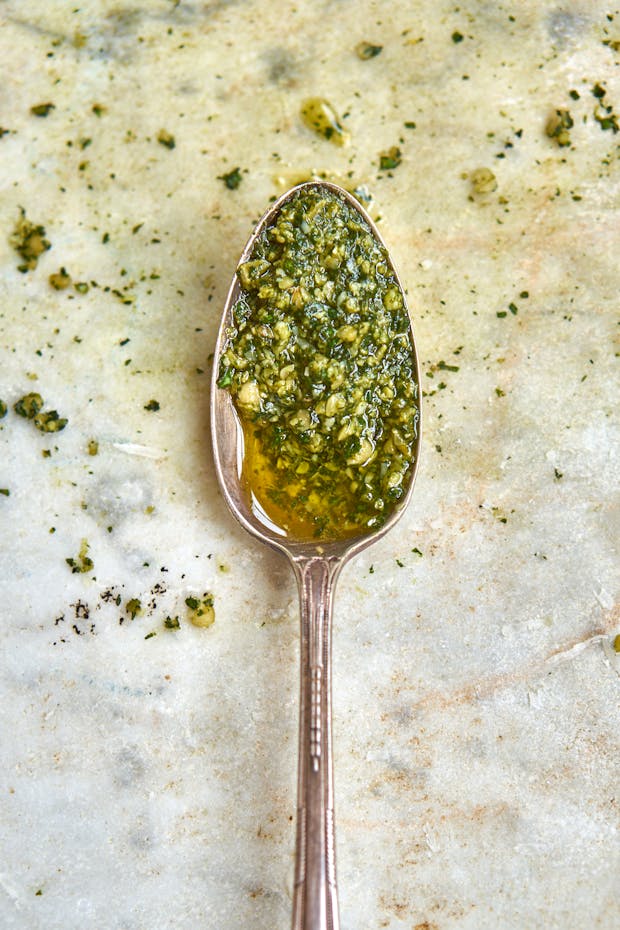
This is my favorite way to make homemade pesto, and if you’ve ever tasted pesto in Italy you know pesto here in the United States isn’t the same. I received a lesson in how to make pesto from a real Italian grandmother and now understand the difference. It’s the details that make this pesto recipe so special.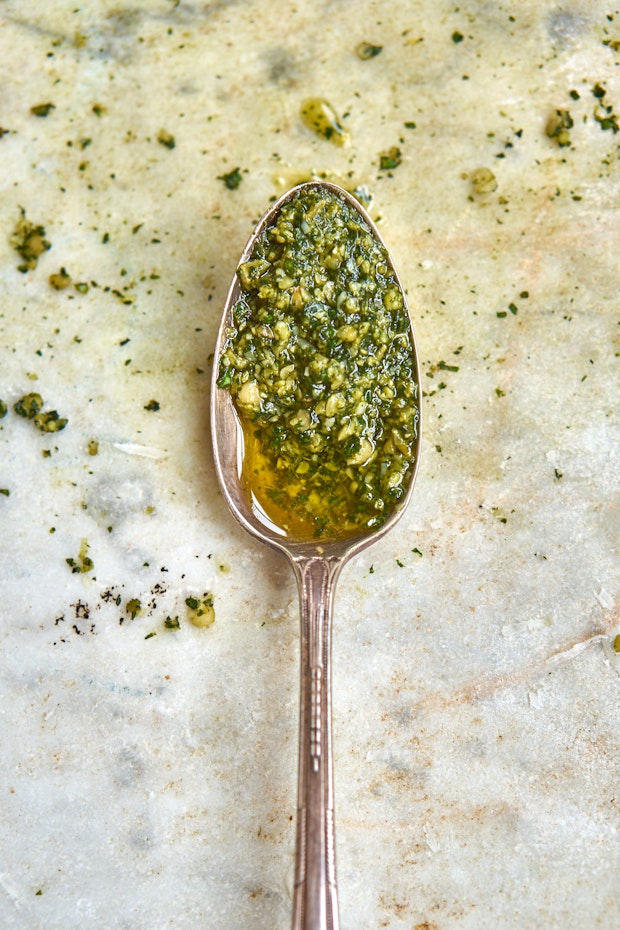
Homemade Pesto: The Inspiration
My friend Francesca makes the trip from her small town near the pesto-epicenter of Genoa, Italy to San Francisco once or twice a year – this time (lucky for us) she brought her mom and two-year old son Mattia. Her mom makes a beautiful pesto (and perfectly light, potato gnocchi to go along with it) and offered to show me (and my friend Jen) how it is done. It was a complete game-changer. If you love pesto, you really have to try this. Her technique results in an incredibly special version.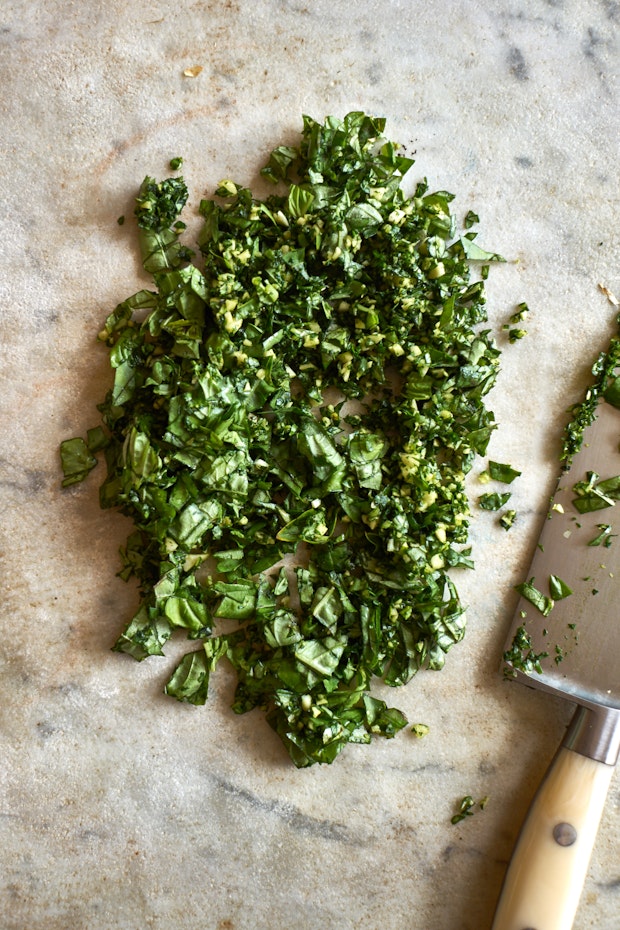
How To Make Pesto
The method can be summed up simply:
- Chop your ingredients by hand, adding basil, garlic, Parmesan cheese and pine nuts in stages.
- Bring it together with a bit of olive oil.
Here’s why. Most of the pesto you encounter here in the U.S. is different for a few reasons. First off, much of it is made by machine, usually a food processor or hand blender. The cook will pulse the ingredients into a paste. This holds true even if it is homemade. Don’t get me wrong, it usually tastes good, but because the ingredients aren’t hand chopped you end up with a texture that is more like like a moist, uniform paste with little to no definition between ingredients. You also might see pesto made with a mortar and pestle. This pesto is something different.
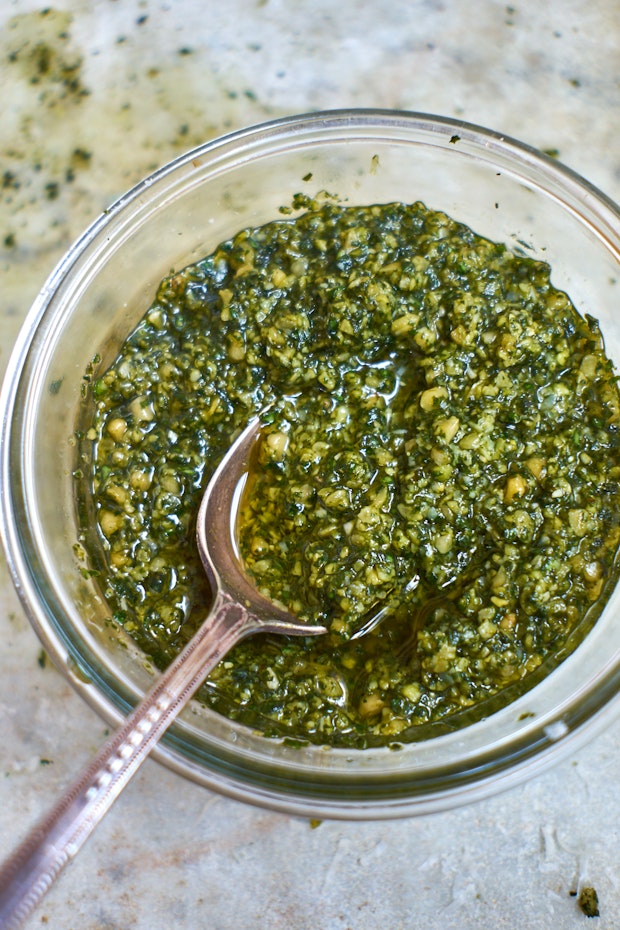
During my lesson I quickly began to realize chopping all the ingredients by hand is key because this prevents the ingredients from becoming a completely homogenized emulsion or paste. When you dress a pasta with a pesto that has been hand chopped the minuscule flecks of basil will separate from the olive oil, pine nuts, and Parmesan cheese in places. You get definition between ingredients, and bright flavors pop in a way they don’t when they’ve been blended into one.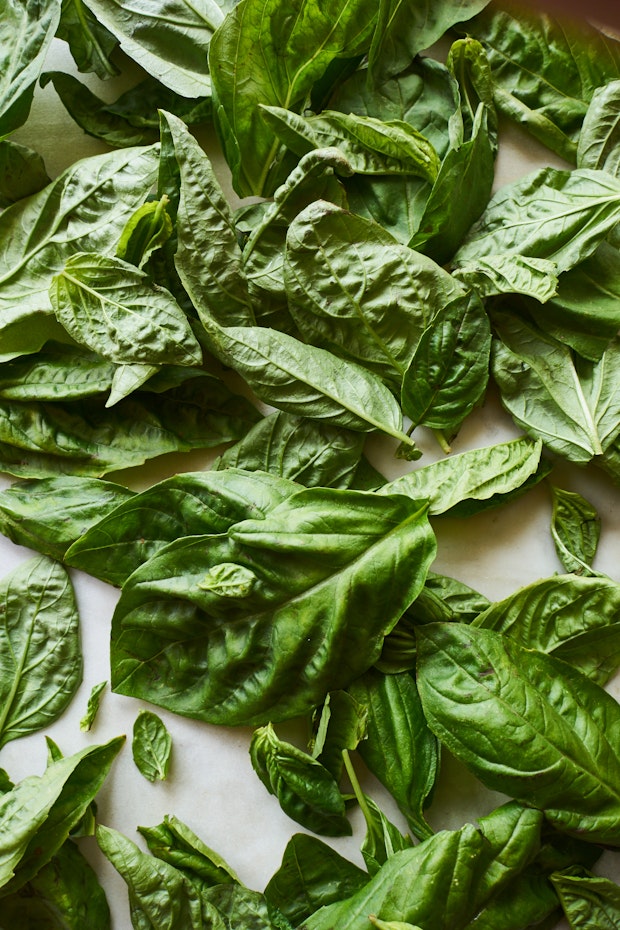
Video: How to Make Pesto
Choosing The Best Basil for Making Pesto
Genovese pesto is famous in part because it is often made with young, small fresh basil leaves. For us non-Italians it is easy to find Genovese basil in stores and at farmer’s markets, particularly in the summer. That said, chances are it wasn’t picked young. I wouldn’t worry about it too much, simply by hand chopping all your ingredients, you will see a major shift in personality of your pesto.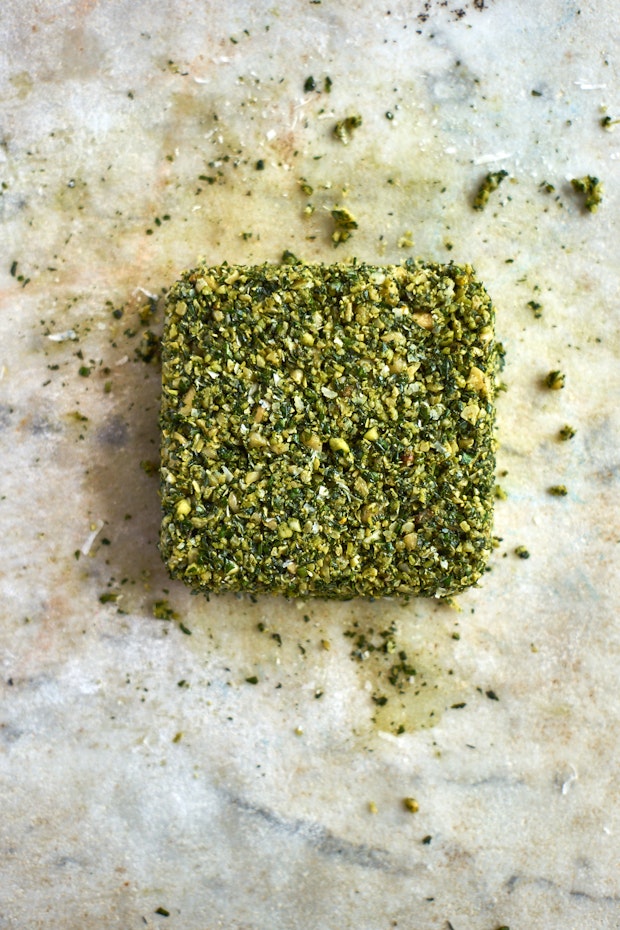
Hand-Chopped vs Food Processor?
Per the above, this pesto celebrates hand-chopping. Correspondingly, if you’re serious about making good pesto using the hand-chop technique you’ll need a sharp (preferably large, single blade) mezzaluna, or a good knife. The sharpness of your blade absolutely matters because you don’t want to bruise or tear your basil. Whatever you use to chop, make sure it has a sharp blade or the basil will turn dark. Chopping the ingredients will take twenty minutes or so. Once you chop your ingredients, you’ll form them into a cake, pictured above. You add olive oil to this cake, and it’s magic. That said, not everyone has the time or patience to hand chop – let’s talk about it.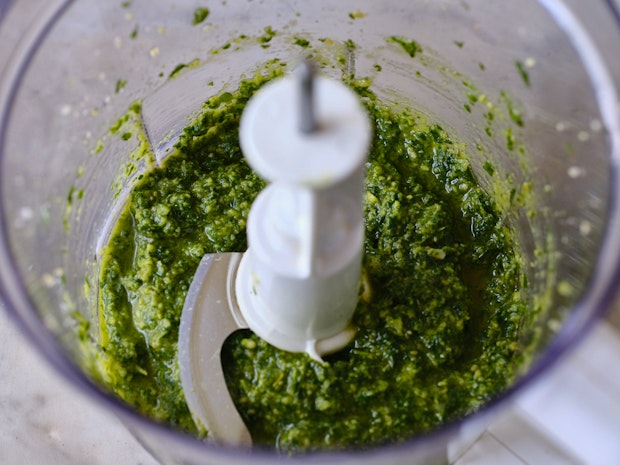
How to Make Pesto with a Blender or Food Processor
We don’t always have time to hand chop, I get it! If you want to make pesto using a blender or food processor here’s how. Pulse the garlic and pine nuts into a chunky paste. Use the quantities in the recipe below. Add the basil and pulse into a bright green paste. Pulse in the olive oil, adding more if you want a thinner texture. Stir in the grated cheese by hand and season with a bit of salt if needed. Some days, are going to be blender pesto days!
How to Use Pesto
What do you eat pesto with? There are so many great ways to use pesto – some traditional, many not.
- On pizza: I love a thick slather as the base sauce on a good pizza (this page actually has an extended list of pizza topping ideas).
- Pasta: Good pasta paired with homemade pesto is a classic duo for a reason. Same goes for pesto and gnocchi. Start with simple homemade pasta, and branch out to other shapes over time – pici and cavatelli are favorites.
- On savory tarts: A slather of pesto on a tart shell before adding the rest of ingredients is a favorite pro-tip. I do it often on this quiche, and on tomato tarts.
- Bruschetta: If you have a slab of sourdough coming off the grill, a bit of pesto, some seasonal roasted veggies, and a dusting of cheese makes an easy meal. Something along the lines of these bruschetta.
- Instant flavor: And because pesto lends a bolt of flavor, I love to whisk a dollop into scrambled eggs, omelettes, mashed potatoes, and baked potatoes. It’s great swirled into grain bowls or spooned over roasted vegetables as well.
Pesto FAQ
Generally speaking, store any pesto you might use in the next day or two, refrigerated, under a thin film of olive oil. You can also freeze it in snack-sized baggies. Thaw and toss with whatever gnocchi, ravioli, or other favorite pasta you like – and a good splash of pasta water!
- How Do I Keep Pesto from Turning Brown? There are a couple ways to keep your pesto bright green. Browning comes from oxidizing. One way to prevent this is to limit exposure to air. Because of this, I like to keep pesto in my narrowest jar with a thin layer of olive oil on top so that no pesto is exposed to air. The other option is to blanch your basil leaves briefly, and proceed with your pesto-making from there. I almost always opt for option one.
- Can Pesto Be Frozen? Yes! You can absolutely freeze pesto. Any pesto you won’t use within a couple days, transfer to freezer baggies. Freeze flat, and break off chunks of pesto to use whenever you need it. When you need larger quantities defrost the entire bag either in the refrigerator or on your countertop.
- How do I store basil? here are a number of great ways to keep basil fresh until you’re ready to use it. If you think you’ll use it within a day or two, keep the basil in a jar of water on your countertop. The way you’d keep a bouquet of flowers. If you think it will be a few days beyond that, treat the basil like you would salad greens. Give the basil a gentle wash, then wrap the leaves in a clean kitchen towel or paper towels, place this in a baggie, and refrigerate until ready to use.
Pesto Variations
Don’t limit yourself to basil pesto. You can absolutely experiment with a blend of other herbs as well. You can add anything from parsley to marjoram (a favorite!), mint to fresh oregano to your basil base. Or leave the basil out entirely! I like to add citrus zest on occasion, or switch up the type of nuts I use – toasted almonds and walnuts are favorites.
- Arugula pesto: swap out all the basil for arugula.
- Vegan pesto: use a hard vegan cheese in place of the Parmesan
- Herb pesto: here’s a five herb pesto I make on occasion. You can chop it by hand or use a food processor.
- Broccoli pesto: This broccoli quinoa recipe uses a broccoli pesto of sorts.
More Pasta Recipes
Favorite Pasta Sauces
Other Favorite Italian Recipes
101 Cookbooks Membership

Premium Ad-Free membership includes:
-Ad-free content
-Print-friendly recipes
–Spice / Herb / Flower / Zest recipe collection PDF
–Weeknight Express recipe collection PDF
-Surprise bonuses throughout the year
browse more: