


Fresh methi in winter is hard to resist. This methi aloo is simple, homely, and exactly the kind of thing you want to cook when methi is at its best.

Methi aloo is a simple, everyday sabzi that lets fresh methi do most of the work. Fresh fenugreek brings a gentle earthiness, the potatoes add comfort, and when cooked right, the dish stays balanced without turning bitter.
Alongside recipes like methi thepla, this is another easy way to use fresh methi through the winter. Simple ingredients that need easy quick steps, it will fit easily into your home meals without feeling heavy or complicated to cook.
Jump to section: Methi Aloo
Ingredients for Methi Aloo
- Methi (Fenugreek Leaves): Fresh methi is the heart of this dish and adds earthiness and a slight bitterness
- Potatoes: Add comfort and balance, and soften the bitterness of the methi
- Aromatics: Ginger, garlic, green chilli, cumin seeds, and dried red chilli for warmth and flavor
- Spices & Seasoning: Coriander powder, cumin powder, turmeric, amchur, salt, and a small amount of asafoetida keep the flavours balanced and prevent bitterness
- Tomatoes: Add mild acidity and help bring the sabzi together
- Cooking Oil: Groundnut oil or any neutral oil works for this dish
Why You’ll Love This Sabzi
Potatoes are often paired with methi for a reason. Their natural starch balances methi’s sharpness, making the dish feel more rounded and comforting. Fresh methi is rich in fibre, iron, and antioxidants, which support digestion and overall gut health, while potatoes provide energy and help make the meal more filling. Together, they create a simple, well-balanced sabzi that’s nourishing without being heavy, especially suited to winter meals.
Frequently Asked Questions
Fresh methi works best for this recipe and gives aloo methi its characteristic flavour and texture. Kasuri methi can’t fully replace fresh leaves, but you can add a small pinch at the end if fresh methi isn’t available, keeping in mind the flavour will be different.
Aloo methi is traditionally kept simple. While you can add vegetables like carrots or peas, doing so will change the flavour and balance of the dish. If you do add anything, keep the quantities small so the methi remains the focus.
Bitterness usually comes from skipping the soaking step or not squeezing out enough water from the methi. Overcooking methi or adding it too early can also intensify bitterness.
Soaking methi leaves in salted water for about 30 minutes, then squeezing them well before cooking, helps reduce bitterness significantly. Cooking the methi uncovered also allows excess moisture and bitterness to evaporate.
Richa’s Top Tips
- Soak the methi first: Soaking methi in salted water and squeezing it well is key to reducing bitterness without losing flavour. Don’t skip this step.
- Cut potatoes evenly: Small, evenly sized cubes cook faster and ensure the potatoes soften properly before the methi goes in.
- Cook methi uncovered: Once added, cook the methi without covering the pan so excess moisture evaporates and the sabzi doesn’t turn soggy.
- Keep the spices gentle: Aloo methi sabji works best when the spices support the methi instead of overpowering it, so measure lightly and avoid over-roasting.
Storage Tips
- In the fridge: Store cooled methi aloo sabji in an airtight container for up to 2 days.
- At room temperature: This sabzi is best eaten fresh and should not be left out for more than a few hours, especially in warm weather.
- Freezing: Freezing is not recommended, as methi tends to lose texture and develop bitterness once thawed.
- Reheating tip: Reheat on low heat and stir occasionally. If the sabzi feels dry, add a small splash of water while reheating.
Serving Ideas
Aloo methi is comforting on its own, but pairs easily with a few staples to make a satisfying meal.
- With Roti or Phulka: Soft rotis are the most natural pairing that let flavours of the sabzi shine without distraction.
- With Paratha: A plain paratha adds a little richness and makes the meal feel more filling, especially for lunch.
- With Dal and Rice: Serve methi aloo alongside a simple dal and steamed rice for a complete, homely meal.
- With Curd or Raita: A spoon of plain curd or a light raita balances the warmth of the methi and keeps the meal light.
- With Cucumber Salad: You can also add fresh onion and tomato salad for a crunchy and fresh bite.
Customisation Ideas
- Add a garlic finish: Lightly crush and sauté an extra clove of garlic at the end and mix it in for a stronger, more rustic garlic flavour.
- Turn it into a one-pan meal: Add the potatoes a little earlier and let them brown slightly before adding the rest. This gives the sabzi more depth and makes it hearty enough to eat on its own.
- Finish with ghee instead of oil: Swapping the final bit of oil for ghee adds a subtle richness that works especially well for winter meals.
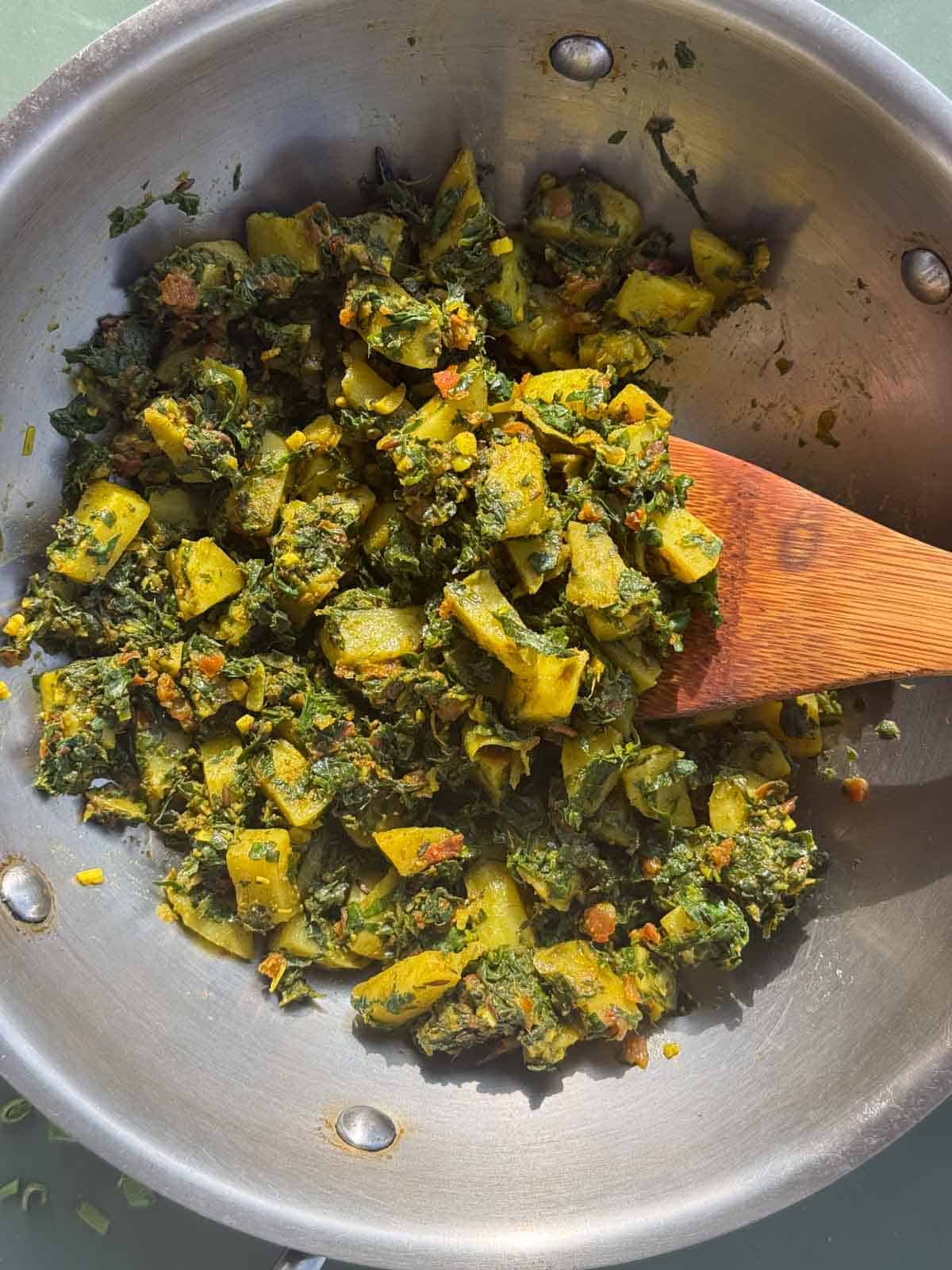
This is everyday food at its best, easy to cook, easy to enjoy, and perfect for winter. If you give it a go, share it with me on Instagram @my_foodstory, I always love seeing your home-style meals.

Methi Aloo
Ingredients
- 3 ½ cups methi 140 grams
- 3 cups water
- 2 teaspoons salt divided
- 1 tablespoon groundnut or any neutral flavored oil
- ½ teaspoon cumin seeds
- ⅛ teaspoon asafoetida hing
- 1 red chilli broken into 2
- 2 potatoes 220 grams/1 cup, chopped into ¼ inch cubes
- ½ teaspoon finely chopped ginger
- 1 teaspoon finely chopped garlic
- 1 green chilli finely chopped
- 1 large tomato finely chopped, ¼ cup + 2 tablespoons, 100 gms
- 1 teaspoon coriander powder
- ¼ teaspoon cumin powder
- ¼ teaspoon turmeric powder
- ½ teaspoon amchur powder
Instructions
-
Take 3 cups of water & 1 ½ teaspoons of salt in a bowl and soak methi for 30 minutes. After 30 minutes, squeeze water from the leaves and finely chop them. This will reduce the bitterness of methi leaves.3 ½ cups methi, 3 cups water, 2 teaspoons salt
-
Heat oil in a pan or kadai, add jeera and after it crackles, add hing & red chilli and saute till fragrant. Add potato cubes and cook on low for 7-8 minutes till they are 75% cooked.1 tablespoon groundnut or any neutral flavored oil, ½ teaspoon cumin seeds, ⅛ teaspoon asafoetida, 1 red chilli, 2 potatoes
-
Add ginger, garlic and saute till fragrant. Add tomatoes, spice powders, ½ teaspoon salt and cook covered for 3-4 minutes until tomatoes turn mushy.½ teaspoon finely chopped ginger, 1 teaspoon finely chopped garlic, 1 green chilli, 1 large tomato, 1 teaspoon coriander powder, ¼ teaspoon cumin powder, ¼ teaspoon turmeric powder, ½ teaspoon amchur powder
-
Add chopped methi and cook without covering for 5-7 minutes till they get roasted well. Serve.
Nutrition
This article was researched and written by Harita Odedra.
The post Methi Aloo appeared first on My Food Story.