

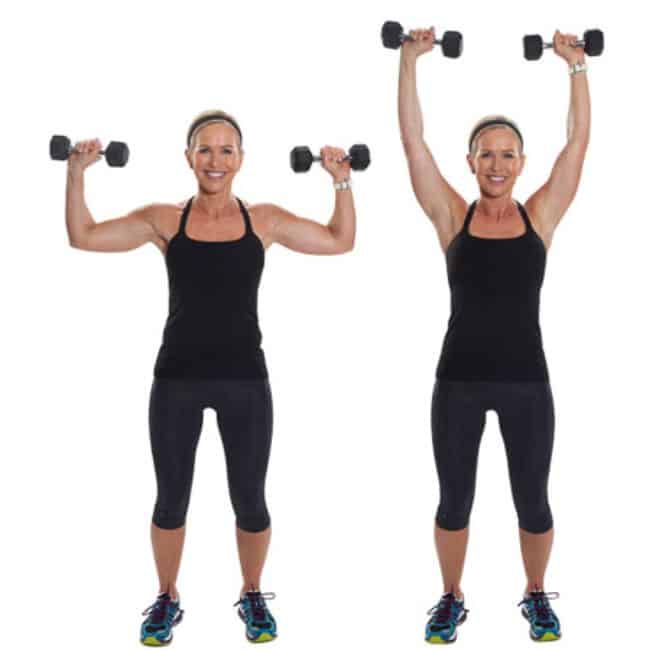
Strong shoulders matter more as we age, especially for women over 50. From lifting groceries to reaching overhead or carrying grandkids, your shoulders support almost every movement you make throughout the day. And when those muscles are strong, everyday tasks feel easier and more comfortable.
That’s why I’m such a big believer in strength training for healthy aging. A simple shoulder workout with dumbbells at home can help improve posture, build upper-body strength, support joint stability, and keep you feeling confident in your body.
The good news? You don’t need a gym or complicated equipment to get results.
This quick dumbbell shoulder workout uses just a few weights and takes less than 20 minutes. These shoulder exercises are beginner-friendly, low impact, and especially effective for women navigating midlife and menopause.
Grab your dumbbells and let’s strengthen those shoulders together!
Why Shoulder Strength Matters After 50
The shoulder joint is one of the most mobile (and vulnerable!) joints in the body. That mobility is great for range of motion, but it also means we need to keep the surrounding muscles strong and balanced to prevent strain or injury.
As we get older, it’s common to lose muscle mass if we’re not actively working to maintain it, but that’s where strength training comes in. Yes, it is possible to build muscle after menopause!
Ready for a quick and effective shoulder workout you can do at home? Grab a pair of heavier dumbbells and a lighter set. I used 15 lbs and 8 lbs, you’ll see why when we hit that front raise!
Quick Shoulder Workout Instructions
This quick and effective shoulder workout with dumbbells is designed to build strength, improve mobility, and sculpt beautifully defined shoulders, all from the comfort of home.
Let’s get started!
Shoulder Workout Instructions:
- Perform each exercise for 15 reps (on each arm, if working one side at a time)
- Complete the full circuit 3 times through
- Rest for 30–60 seconds between rounds
Try this workout 3 times a week, and don’t be afraid to progress to heavier weights as you get stronger!
1. Overhead Shoulder Press
This classic move targets the deltoid muscles, especially the front and side heads, building strength for all overhead movements and everyday lifting tasks.
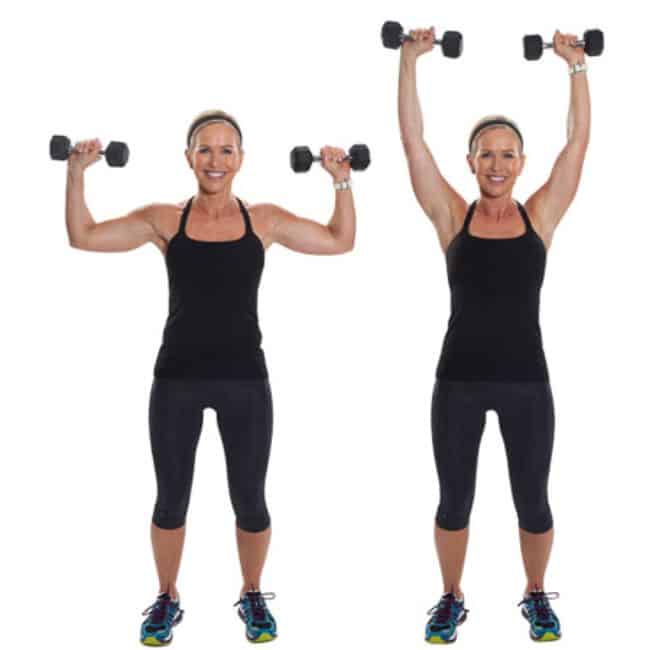
Muscles worked: Deltoids (especially anterior and medial), triceps
Equipment: Heavier dumbbells
How to do it:
- Start by standing tall or sitting on a bench, holding a dumbbell in each hand at shoulder height, palms facing forward.
- Press the weights overhead until your arms are fully extended, but don’t lock your elbows.
- Slowly lower the dumbbells back down to shoulder height with control.
- Repeat for 15 reps.
Tips: Keep your core tight and avoid arching your back. Engage your glutes and abs to protect your lower spine.
2. Arnold Press
Named after Arnold Schwarzenegger, this dynamic press variation hits all three heads of the deltoid (front, middle, and rear) in one fluid motion, helping improve shoulder stability and definition.

Muscles worked: All three heads of the deltoid (front, side, rear), biceps
Equipment: Heavier dumbbells
How to do it:
- Start with dumbbells in front of your shoulders, palms facing you (like you’re holding a big book).
- As you press the weights overhead, rotate your wrists so that your palms face forward at the top of the movement.
- Reverse the motion as you lower the dumbbells back to the starting position, rotating your palms back toward your face.
- Repeat for 15 reps.
Tips: Move with control, this rotation challenges shoulder stability and works your muscles in a slightly different way than a standard press.
3. Front Raise (Use lighter dumbbells!)
This isolation move zeroes in on the anterior deltoids, helping create shoulder symmetry and definition while supporting pushing movements like opening doors or lifting objects in front of you.

Muscles worked: Anterior deltoid (front of shoulder)
Equipment: Lighter dumbbells
How to do it:
- Stand with your feet hip-width apart, holding the dumbbells in front of your thighs, palms facing down.
- Keeping your arms straight (but with a slight bend in the elbow), raise both arms up to shoulder height.
- Pause briefly at the top, then slowly lower back to the starting position.
- Repeat for 15 reps.
Tips: Don’t swing the weights, use slow, steady movement. This one will burn, even with lighter weights!
4. Overhead Pulls
This functional movement strengthens the rear deltoids and upper back, promoting better posture and balance while supporting shoulder joint health and upper-body coordination.

Muscles worked: Shoulders, upper back, triceps
Equipment: Light to medium dumbbells
How to do it:
- Hold a single dumbbell vertically with both hands (gripping each end of the dumbbell like a goblet).
- Start with the dumbbell directly overhead, arms extended.
- Slowly lower the dumbbell behind your head, bending at the elbows.
- Engage your shoulders and triceps as you bring the weight back overhead.
- Repeat for 15 reps.
Tips: Keep your elbows pointing forward and close to your ears, avoid letting them flare out. This one works your shoulders and triceps while also improving mobility.
That’s it! Four simple, super effective shoulder exercises you can do at home, in under 20 minutes, with just a few sets of dumbbells. Stick with it 3 times a week, and don’t forget to increase your weights when you stop feeling that good muscle fatigue by the end of your sets.
What Dumbbells Should You Use for Shoulder Exercises?
Choosing the right dumbbells for shoulder exercises is important because the shoulder joint is smaller and more delicate than larger muscle groups like your legs or chest. For most women over 50, I recommend starting with lighter weights, typically 5 to 10 pounds for isolation moves like front raises, and slightly heavier dumbbells for presses if your form feels strong and controlled.
The key is finding a weight that challenges your muscles by the last few reps without causing strain in your neck, shoulders, or lower back.
Remember, good form always matters more than lifting heavy. As your strength improves, gradually increasing your weights can help build muscle, support bone health, and improve functional fitness.
See my complete guide on when to increase your weights for the best guidance!
Tips for Protecting Your Shoulder Joints During Workouts
Your shoulders are incredibly mobile joints, which also makes them more vulnerable to strain if you’re not careful. The best way to protect your shoulder joints during workouts is to focus on controlled movement and proper form instead of rushing through reps.
Start each workout with a quick warm-up to increase blood flow and mobility. Keep your core engaged during overhead movements to avoid arching your back, and never force a range of motion that feels painful. If an exercise causes pinching or discomfort, reduce the weight or modify the movement.
I also encourage women over 50 to include posture exercises and upper-back strengthening in their routine. Strong supporting muscles help keep the shoulders stable and healthy for everyday movement.
How Often Should Women Over 50 Train Shoulders?
For most women over 50, training shoulders 2 to 3 times per week is a great goal. Your shoulder muscles are involved in many upper-body exercises already, so they respond well to consistent, balanced strength training without needing daily workouts.
Make sure to allow at least one rest day between shoulder sessions so your muscles have time to recover and rebuild. Recovery becomes even more important during midlife and menopause, when muscle repair and joint health need extra attention.
The good news is you don’t need hours in the gym to see results. Even a quick shoulder workout with dumbbells at home a few times each week can help improve posture, build strength, and make daily tasks feel easier and more comfortable.
Remember, this isn’t just about how your shoulders look, though let’s be honest, strong, sculpted shoulders feel amazing in sleeveless tops, it’s about how they support you in daily life. Strength = freedom and confidence at every age.
You may also enjoy my 5 exercises to tone your arms over 50!
Now tell me… who’s in?! Let’s sculpt those shoulders together.
Shoulder Workout FAQ
Yes! Strength training helps maintain muscle mass, improve posture, and support healthy joints as you age. Start with lighter dumbbells and focus on good form.
Most women over 50 can safely train shoulders 2–3 times per week with rest days between sessions.
Start with lighter dumbbells (5–10 lbs) and gradually increase as your strength improves.